
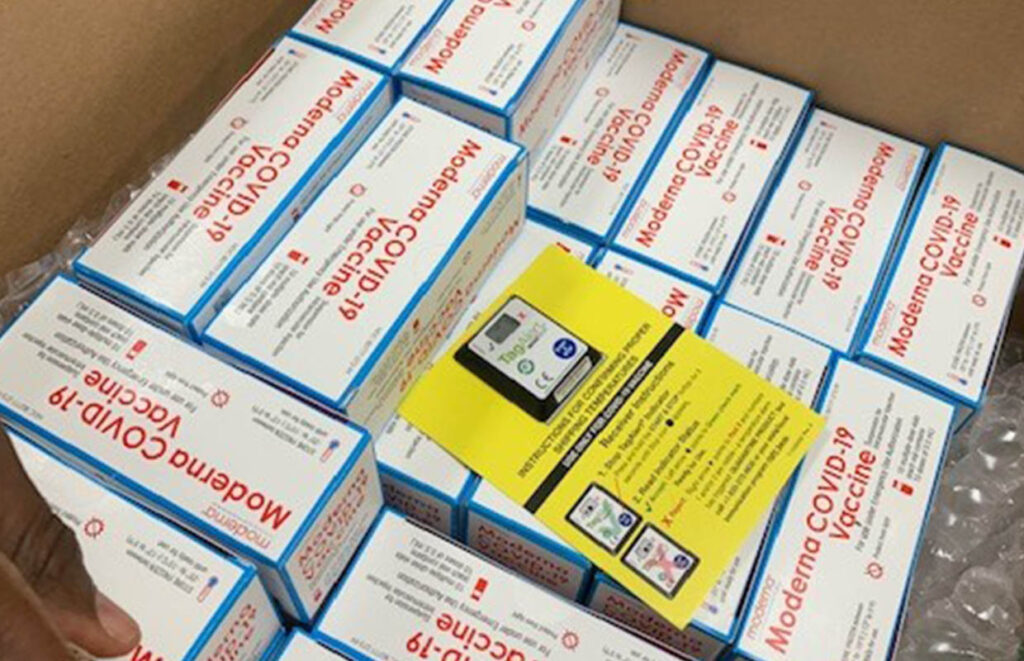
COLUMBUS – The Trump administration on Tuesday unexpectedly shifted gears to speed the delivery of the COVID-19 vaccine to Ohio and other states.
A slow start had triggered widespread concern from states and public health officials but Health and Human Services Secretary Alex Azar announced two major changes.
First, the government will no longer hold back required second doses of vaccines, practically doubling supply.
Ohio’s Republican governor hailed the move as a sign that the federal government has grown more comfortable with the pace at which vaccines will become available to states in the future.
“We’re hearing the Trump administration and the upcoming Biden administration both have enough confidence in the supply chain – they’ve obviously done the math and figured it out – that they will be able to release these,” Gov. Mike DeWine said.
Second, Azar said states should immediately start vaccinating other groups lower down the priority scale, including people age 65 and older and younger people with certain health problems.
That aligns the Trump administration with President-elect Joe Biden, who earlier said he would not hold back second doses.

While saying that Ohio’s remained on schedule to begin vaccinating older adults beginning next week, DeWine also called on the state’s hospitals to complete the vaccinations of their frontline healthcare workers as part of the initial round of vaccinations by Sunday.
The next phase of vaccinations — Phase1B – begins Jan. 18 (see above) and will eventually include Ohioans age 65 and older, those with congenital and early onset health conditions and K-12 school staff. The first group of those eligible for vaccines will be those 80 and older.
More details on vaccinations will be available this week, DeWine said.
The state reports 2.75% of the state’s population – 321,506 individuals – have received at least the first of two doses of the COVID-19 vaccine.
Top priority for vaccinations was given to medical personnel who are routinely involved with the care of COVID-19 patients, emergency medical staff, residents and staff at nursing and assisted living facilities, psychiatric hospitals and state-operated veterans’ homes; and people with intellectual disabilities or mental illness who reside in group homes or centers, and staff at those locations.
There have been 792,938 cases of COVID-19 in Ohio since the pandemic began, with 7,981 added on Tuesday. The number of cases has increased by 50,121 in the last week, or approximately 7,160 per day.
The number of deaths has grown to 9,802.
The number of hospitalized patients increased by 486. There were 4,010 Ohioans being treated for coronavirus in hospitals Tuesday, occupying 14.5% of the statewide inpatient capacity.
The state’s seven-day positivity rate was 13%.