
COLUMBUS – Celebrities, politicians and professional athletes faced a backlash this week as several revealed that they had been tested for the coronavirus, fueling a perception that the wealthy and famous have been able to jump to the head of the line to get tested while others have been turned away.
The Ohio Department of Health call center is open 7 days a week from 9:00 a.m. to 8:00 p.m. to answer questions regarding COVID-19 at 1-833-4-ASK-ODH (1-833-427-5634).
Click here for the latest information from the Ohio Department of Health and the Centers for Disease Control and Prevention
Concerns over preferential treatment underscore a fundamental truth about inequalities baked into the American health care system — those with financial means can often receive a different level of service.
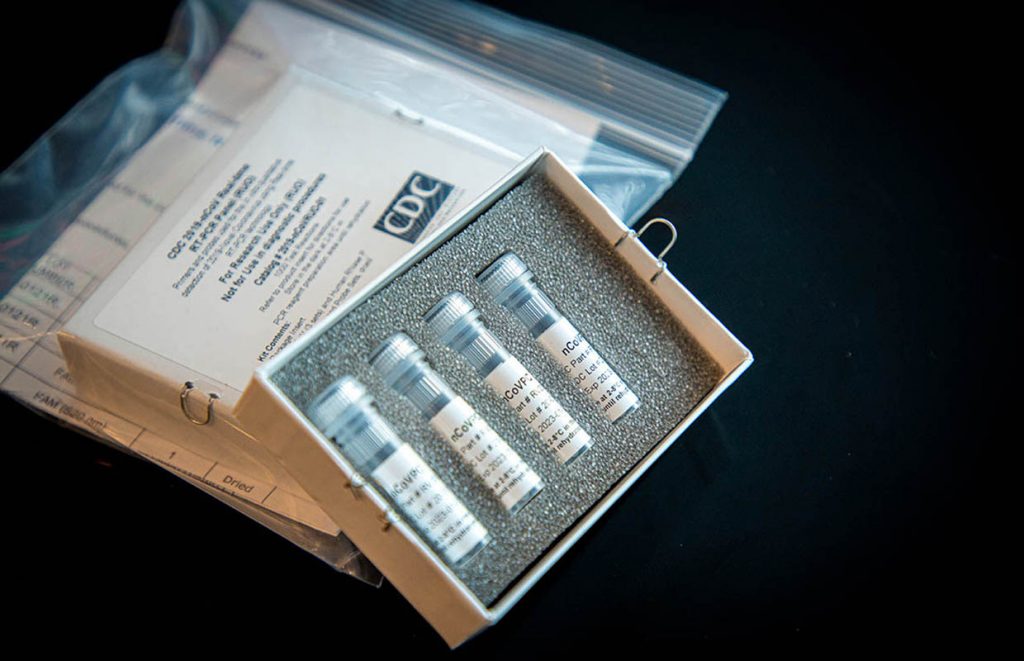
Ohio officials are trying to dispel misconceptions about COVID-19 testing in the state while acquainting residents with some facts that may not be comforting: The state, like much of the nation, is still experiencing a shortage of testing materials.
“Union County has a significant shortage of testing supplies for COVID-19,” Union County Health Commissioner Dr. Jason Orcena said. “Governor DeWine reiterated today that this is not unique to Union County. Testing capacity in Ohio is limited. Governor DeWine further stated testing capacity across the U.S. is limited. It will likely remain limited.”
“Coping With Coronavirus:” Advice for parents, symptoms and more information
“The story will continue to change but the narrative around testing has confused people at home,” Ohio Department of Health director Dr. Amy Acton said Wednesday. “It’s made them think every one of us should be tested, that every one of us should go in a drive-thru and that’s simply not it. It’s still very low numbers of testing availability and that testing is being saved for those highest at risk.
RELATED: DeWine closes salons, BMV offices
The highest priority for testing is reserved for hospital patients, people with pre-existing health conditions that put them at high risk and, under recently revised guidelines from the federal Centers for Disease Control and Prevention, health care and emergency workers.”

Acton explained that Ohio, despite its large population, was lagging behind in testing because the first batch of test kits issued by the CDC were faulty and the nation is beginning to run short of cotton swabs needed for using the newest kits.
Congress yesterday approved a $100 billion-plus bill to boost testing for the virus.
Testing is not being done on people with mild or moderate illness or no symptoms at all, Union County Health Commissioner Dr. Jason Orcena said.
A doctor who thinks testing is necessary for a patient with underlying medical conditions and moderate illness, the case will be considered, Orcena said.
Data indicates nearly 90 percent of people who contract COVID-19 will have mild illness or no symptoms and will be able to treat themselves at home. Acton says most will be able to treat this like a very bad cold or the flu.
Acton estimated that between 40 percent and 80 percent of the state’s population will contract the virus in a year’s time.