
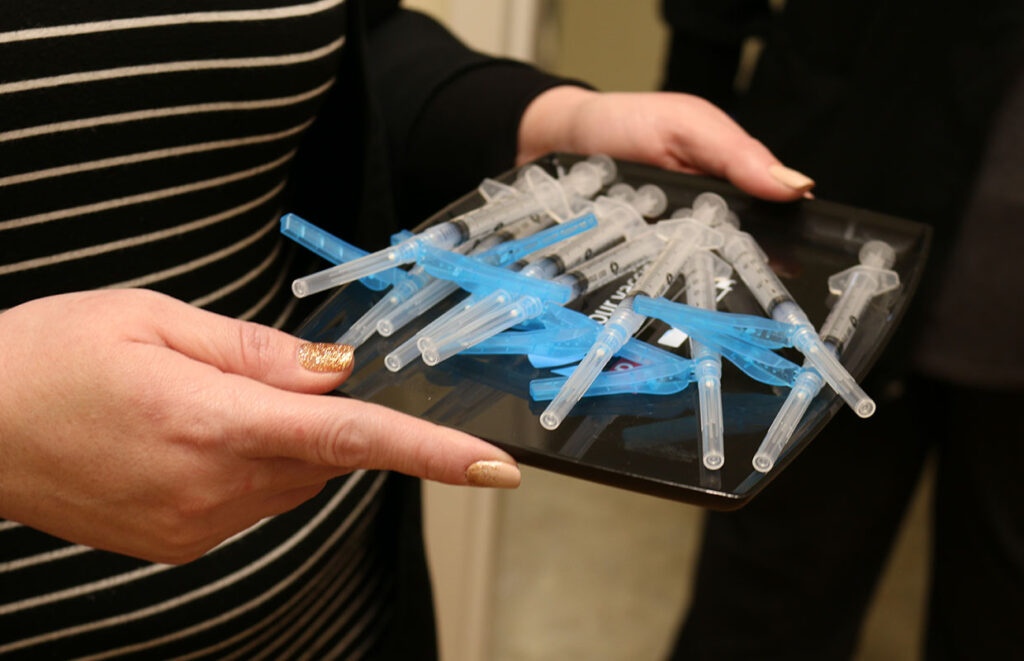
COLUMBUS – Mayor Andrew Ginther’s administration is asking Columbus City Council to repeal its local mask mandate, though the city’s top health official also says unvaccinated residents should continue to wear masks to prevent the spread of COVID-19.
The state reports that 598,294 Franklin County residents – 45.44% of the total population – have gotten at least one of the vaccine doses but, with relatively high COVID activity in Columbus, even fully vaccinated individuals should continue to wear a mask as appropriate in crowds and everyone should continue to wash their hands frequently and stay home if they are sick, Health Commissioner Dr. Mysheika Roberts said.

The latest guidance from the CDC says Americans no longer need a mask in most cases if they are fully vaccinated. That includes when they’re outside and in many indoor spaces like restaurants, hair salons and grocery stores, but everyone still needs to follow local and business rules.

Ohio’s “Vax-a-Million” lottery drawing is having an impact on the rate of people getting the vaccinations.
The Ohio Lottery and Department of Health, the agencies which are jointly overseeing the drawings, report that approximately 1 million entries have been collected and that preliminary data shows vaccination rates are growing as a result.
“After the announcement, our preliminary data shows that more than 113,000 Ohioans have received their first dose of COVID-19 vaccines,” Ohio Department of Health director Stephanie McCloud said.
That marks a 53% increase from the 74,000 shots administered during the previous week, with many of the shots going to teens between 12 and 17 years of age, groups who were recently deemed eligible for the vaccines.
According to the department website, 5,048,080 Ohioans have received at least one dose of a vaccines, or 43.19% of the state’s total population and 4,432,561 — or 37.92% — have been fully vaccinated.
The lottery will award five $1 million prizes and five full-ride college scholarships. The first winners will be announced May 26.
The health department fielded more than 60,000 calls about the lottery when it opened Tuesday and the web site had more than 25 million page views.
The department plans to release the total number of entrants May 24 after the first names are drawn and the verification process is completed.

The state reported that new cases of COVID-19 in the state remained below 1,000 at 918 with 1,093,534 total cases since the pandemic began.
The pandemic has claimed the lives of 19,628 Ohioans.
The incidence rate fell to 119.9 cases per 100,000 residents last week (right).
There were an additional 104 hospital admissions, bringing the total number of Ohioans who have been treated in hospitals for COVID-19 to 58,271. There were 834 patients being treated Wednesday and 23,882 active cases across the state, the lowest number since Oct. 15.
The seven-day positivity rate is 3.4%.

The number of Ohioans filing initial jobless claims fell 12% during the week that ended May 8 as businesses hire workers in anticipation of the lifting of all pandemic health orders on June 2.
The state Department of Job and Family Services reported 17,472 first-time claims for unemployment benefits to the U.S. Department of Labor.
That was a 21% decline over the same time a month ago and the lowest number since Sept. 19.
Ohioans also filed 228,061 continued jobless claims last week, 71% fewer than at the height of the pandemic shutdown last year. Gov. Mike DeWine has announced that, on June 26, the state is ending the $300 additional weekly benefits provided by the federal government.
The number of Americans seeking unemployment aid fell last week to 444,000, a new pandemic low and a sign that the job market keeps strengthening as consumers spend freely again, viral infections drop and business restrictions ease.