
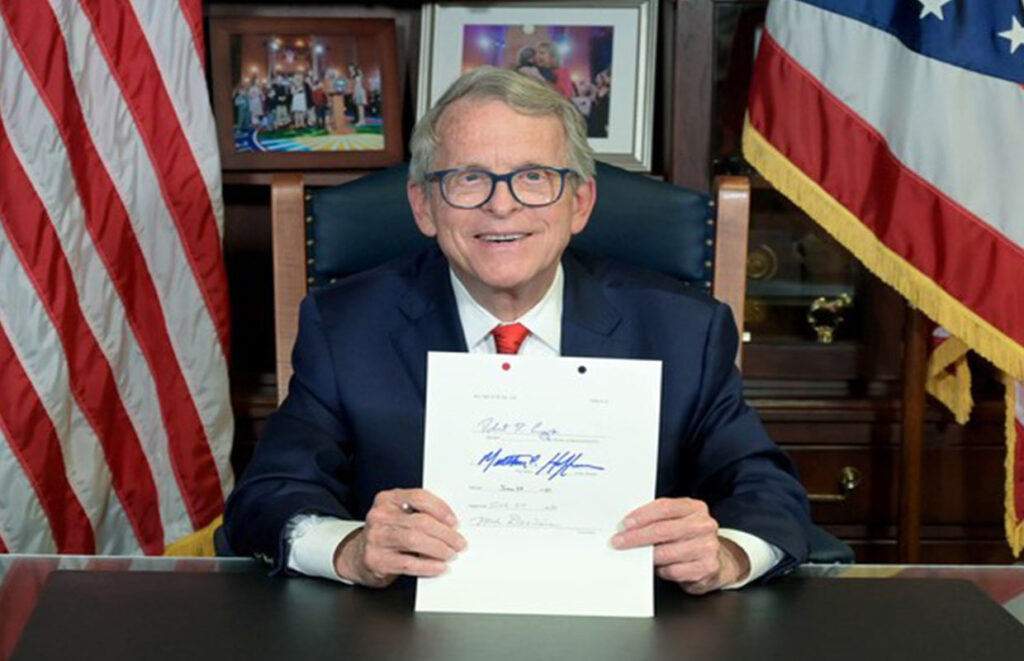
COLUMBUS – Governor Mike DeWine signed Ohio’s new two-year budget overnight, hours ahead of the deadline mandated by state law.
The $75 billion spending plan for the fiscal years 2022 and 2023 won final approval from lawmakers late Monday.
It includes a bipartisan plan to overhaul how schools are funded in Ohio and a 3% income tax cut.
The budget provides $1.7 billion more in state funding for K-12 schools than in the prior biennium, an 8.7% increase.
In addition to funding a variety of health programs, the budget also provided $250 million for broadband access over two years.
The plan sets aside $460 million for grants to help bars, restaurants, hotels, entertainment venues and other businesses – from movie theaters and bowling alleys to trampoline parks and private museums –impacted by the COVID-19 pandemic recession, as well as those new businesses that opened their doors after January 1, 2020.
In keeping with DeWine’s vow to support police reform efforts, the budget calls for approximately $19 in funding for local law enforcement agencies for body-worn cameras and recruiting and for local communities for programs to reduce violent crime.
DeWine vetoed 14 items in the budget but was criticized by Democrats for leaving intact a tax cut that they claim favors wealthy Ohioans.
Also on Wednesday, DeWine signed legislation directing about $2.2 billion in federal COVID-19 relief to children’s behavioral healthcare, water and sewer infrastructure projects, local government budgets and paying off the state’s unemployment insurance loan.
The Republican governor called it a “happy day” for the state.
The bill he signed Tuesday allocates most of Ohio’s first payout from the American Rescue Plan Act.
It includes $84 million for pediatric behavioral health initiative, $250 million for water and sewer infrastructure, $422 million for over 2,000 local governments and roughly $1.5 billion to repay a federal loan that shored up the Unemployment Insurance Trust Fund.