
COLUMBUS – Here, kitty, kitty…
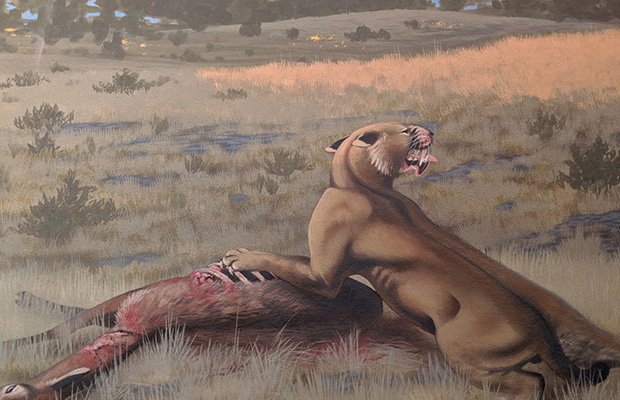
Years of work paid off for an assistant professor at Ohio State’s Marion campus with the discovery of a new species of giant cate that roamed North America between 5 million and 9 million years ago, a 600-pound behemoth capable of taking down prey three times its size.
“We believe these were animals that were routinely taking down bison-sized animals. This was by far the largest cat alive at that time,” Jonathan Calede, an assistant professor of evolution, ecology and organismal biology, said.
Calede and another assistant professor from Gonzaga University compared fossil specimens excavated in Oregon with previously identified fossils and bone samples -from around the world and identified the cat, which might have weighed up to 900 pounds and could have managed to kill prey weighing up to 6,000 pounds, making it one of the largest species of cats in Earth’s history.
Calede worked alongside John Orcutt, assistant professor of biology at Gonzaga, who initiated the project after finding a large upper arm bone specimen that had been labeled as a cat in the University of Oregon Museum of Natural and Cultural History collection when he was a graduate student.
After years of researching the fossil, along with others in collections in California and Texas museums, they determined that the new species, dubbed Machairodus lahayishupup, is an ancient relative of the best-known saber-toothed cat Smilodon, a famous fossil found in the La Brea Tar Pits in California that went extinct about 10,000 years ago.
Laháyis Húpup means “ancient wild cat” in the Old Cayuse language. The Oregon fossil was found on the traditional lands of the Cayuse tribe.